
The outside offer arrives before internal capital is ready
The right exists, but nobody has the money or approval speed to match. A protective clause becomes a missed window.
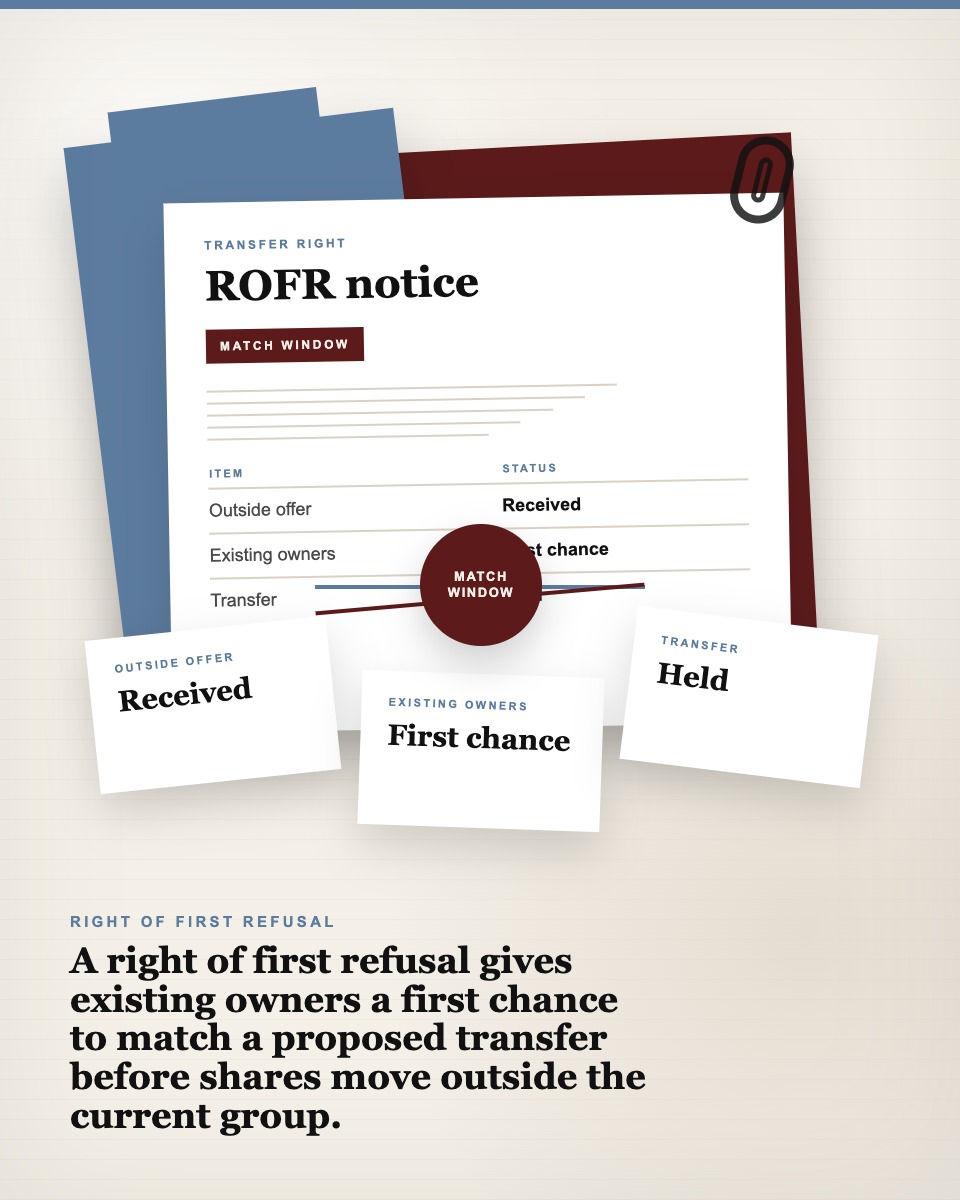
A right of first refusal gives existing owners a first chance to match a proposed transfer before shares move outside the current group.
Plain definition
A right of first refusal, often shortened to ROFR, appears in shareholder agreements, operating agreements, founder agreements, and transfer restrictions. It controls what happens when an owner wants to sell shares to someone outside the current ownership group.
The right usually gives existing owners or the company the opportunity to match the outside offer before the transfer can close. The details matter: notice, price, matching terms, timing, and what counts as a real third-party offer.
A right of first refusal does not stop a sale by itself. It gives the current ownership group the first chance to keep the shares inside.
What goes wrong
The right exists, but nobody has the money or approval speed to match. A protective clause becomes a missed window.
The seller claims notice was given. The other owners say the terms were incomplete. The fight becomes process before it becomes price.
The clause focuses on share transfers but misses indirect transfers, holding-company changes, side agreements, or economic arrangements that move control another way.
A third party structures the offer to make matching hard. The ROFR holder is left deciding under compressed timing and imperfect information.
Business owner questions
In practice
Tag rights often sit beside ROFR provisions because both govern share transfers.
Related structure Preemptive RightsPreemptive rights protect against dilution from new shares, while ROFR protects transfers of existing shares.
Related structure Ownership Structures ExplainedOwnership structure decides whether a transfer restriction is protective or decorative.
Related pages
The guide to who owns what, what rights attach, and what changes when shares move.
Related pagesThe operating question behind every transfer restriction.
Related pagesA transfer right becomes practical when the ownership change is no longer theoretical.
Use the definition to understand the mechanism. If the issue is now affecting ownership, authority, timing, or trust, treat it as a business decision before choosing the next document.
Work with Stan
Start with Work with me for monthly 1:1 business work, or request scope when the issue involves board, ownership, partner, leadership, or larger collaboration.