
The early leaver keeps the ownership structure
A co-founder leaves early with a large stake. The remaining team does the work while the absent founder keeps the economics.
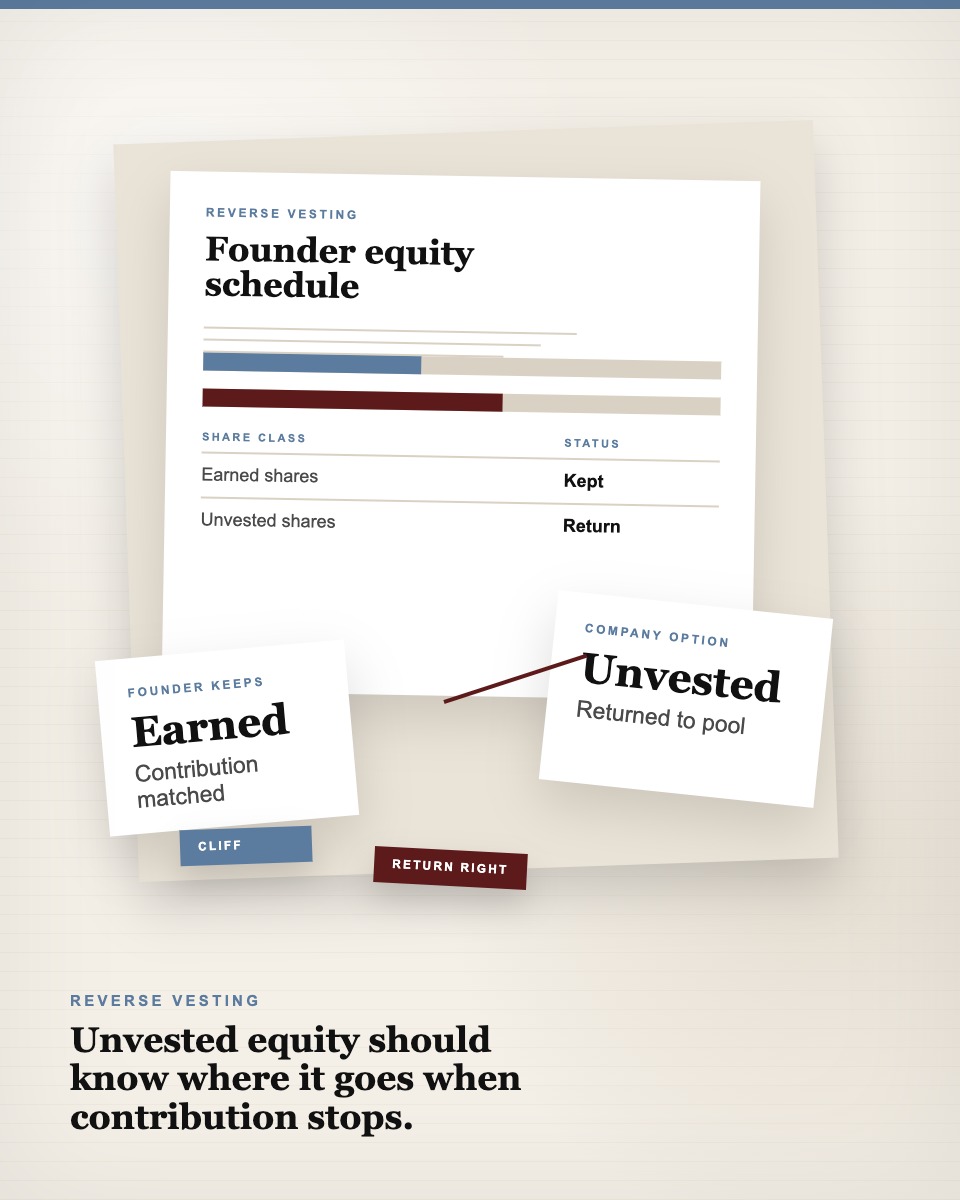
Reverse vesting lets a company reclaim unvested founder shares if a founder leaves before earning them through time or contribution.
Plain definition
Reverse vesting is commonly used for founders who receive shares upfront at incorporation. The shares are issued, but the company keeps a repurchase right over the unvested portion if the founder leaves early.
The structure is meant to protect the company and remaining founders from a ownership structure where someone owns a large stake after stopping contribution. It matters most before the first real disagreement, because after that the conversation is already more expensive.
Reverse vesting turns founder equity from a permanent gift into equity that has to be earned by staying in the work.
What goes wrong
A co-founder leaves early with a large stake. The remaining team does the work while the absent founder keeps the economics.
Future investors see dead equity and ask who controls it, whether it can be cleaned up, and how much pain the cleanup will cause.
Equity that should help recruit senior talent is locked with someone no longer building the company.
Because the agreement did not define what happens on early departure, the cleanup becomes a personal negotiation at the worst possible moment.
Business owner questions
In practice
Founder vesting is the broader frame for tying founder ownership to time and contribution.
Related structure Consent RightsConsent rights can affect later cleanup if investor approval is needed to restructure founder equity.
Related structure How Should Equity Between Founders Be StructuredHow Should Equity Between Founders Be Structured explains why the first split needs more than a percentage conversation.
Related pages
The founder equity guide that sits upstream of reverse vesting.
Related pagesA guide to the structures that carry founder equity.
Related pagesThe agreement design that makes departure less destructive.
Use the definition to understand the mechanism. If the issue is now affecting ownership, authority, timing, or trust, treat it as a business decision before choosing the next document.
Work with Stan
Start with Work with me for monthly 1:1 business work, or request scope when the issue involves board, ownership, partner, leadership, or larger collaboration.