
The 50/50 company freezes
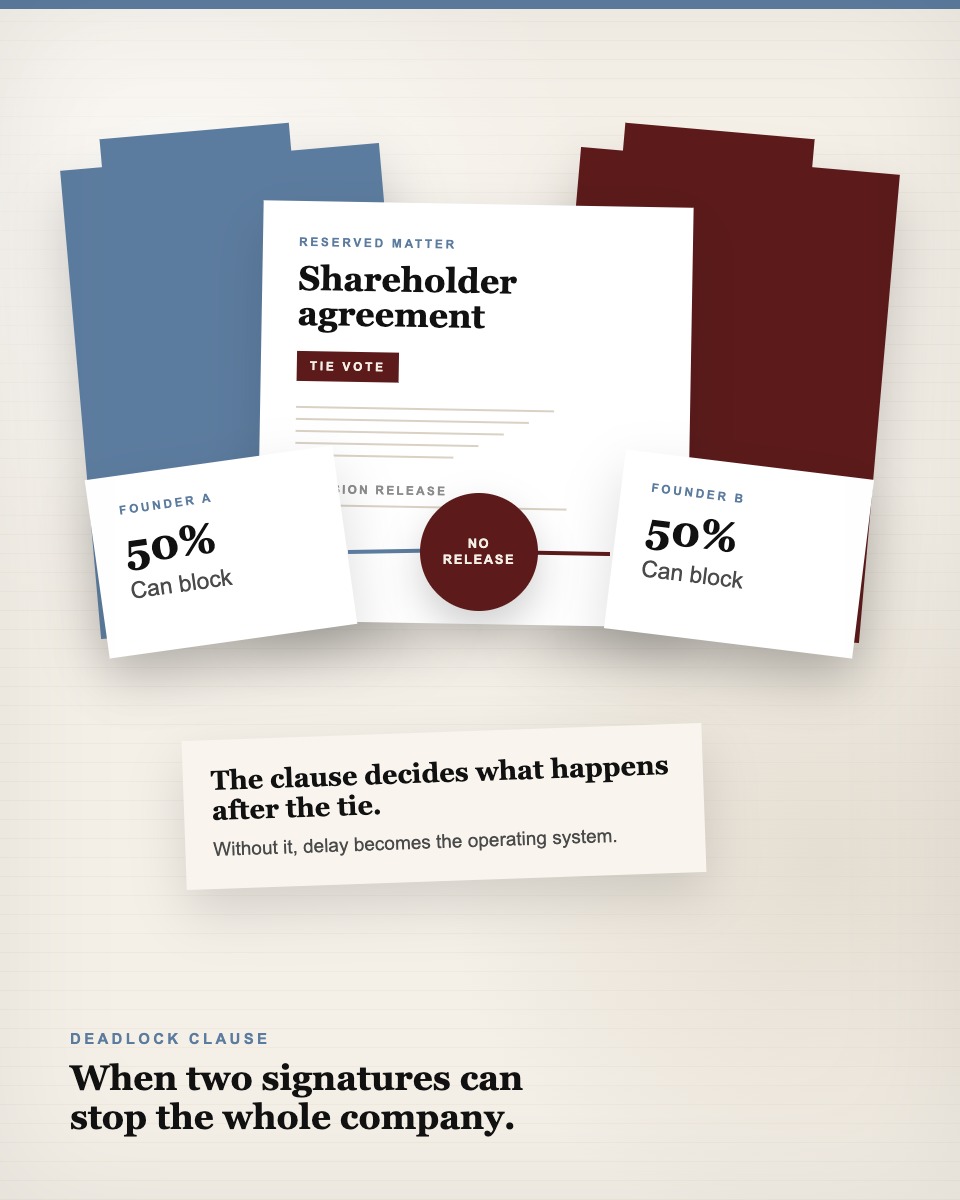
Two founders each own half. Both can block the other. The first major disagreement is handled through delay because no one has the authority to close it.
A deadlock clause defines what happens when co-founders, shareholders, or directors are split and the company still needs a decision.
Plain definition
A deadlock clause sits inside a shareholders agreement, operating agreement, partnership agreement, or board framework. It gives the company a defined way to move when the people with authority cannot reach agreement.
The clause usually matters most in 50/50 ownership, equal board seats, family ownership, or founder groups where one decision requires agreement from people who no longer see the same company in front of them.
A deadlock clause is the mechanism that prevents a tied vote from becoming the company strategy.
What goes wrong
Two founders each own half. Both can block the other. The first major disagreement is handled through delay because no one has the authority to close it.
The same business cost returns every month with more data and less trust. The meeting cadence creates motion, but the decision remains untouched.
Nobody wants to trigger a fight, so operating teams build workarounds. Those workarounds become the company's real governance.
A sale, buyout, or lawsuit becomes the first real resolution process. That is the most expensive time to discover the agreement had no deadlock path.
Business owner questions
In practice
Decision rights define who can close which decisions before a deadlock forms.
Related structure Consent RightsConsent rights can create deadlock when a reserved decision needs approval from someone whose incentive has changed.
Related structure Partnership Agreements That HoldPartnership agreements that hold explains why the deadlock mechanism has to be built before the relationship is under pressure.
Related pages
The guide to agreement clauses that survive real disagreement.
Related pagesThe operating version of deadlock before it becomes a document problem.
Related pagesThe structural cost of decisions that have no clear owner.
Use the definition to understand the mechanism. If the issue is now affecting ownership, authority, timing, or trust, treat it as a business decision before choosing the next document.
Work with Stan
Start with Work with me for monthly 1:1 business work, or request scope when the issue involves board, ownership, partner, leadership, or larger collaboration.